Large Cap vs Mid Cap vs Small Cap in India: Simple Guide for Investors
Large Cap vs Mid Cap vs Small Cap in India: Simple Guide for Investors
If you are an Indian working professional, small business owner, or salaried employee, you may have heard these words many times:
But honestly, most people invest without fully understanding what these terms really mean.
Some people say:
“Large cap is safe”
“Mid cap gives good returns”
“Small cap makes you rich”
But the truth is — each category has its own role in wealth building.
In this article, we will explain Large Cap vs Mid Cap vs Small Cap in India in a simple, practical, and realistic way, using Indian examples that you can easily relate to.
What Does “Market Capitalization” Mean?
Before comparing, let’s understand one basic idea.
Market Capitalization = Share Price × Total Shares
It tells us how big a company is in the stock market.
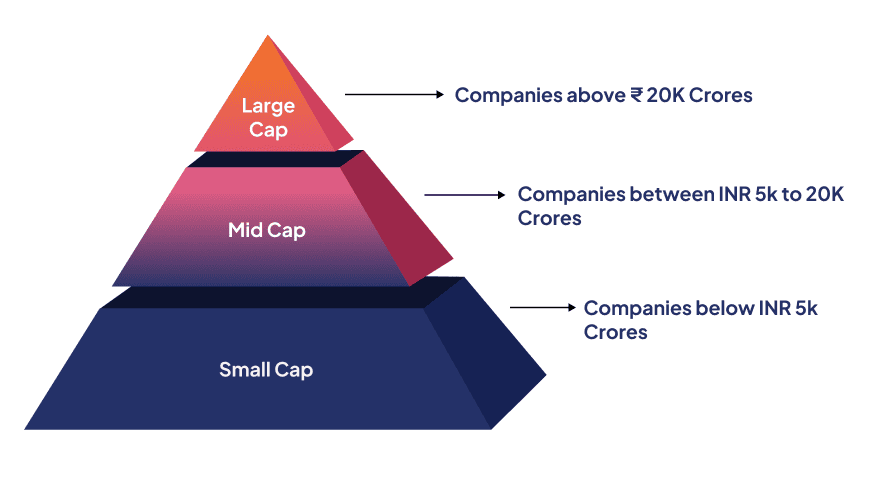
Based on this, Indian companies are divided into three groups by guidelines of SEBI:
| Category | Market Size |
|---|---|
| Large Cap | Top 100 companies |
| Mid Cap | Rank 101–250 |
| Small Cap | Rank 251 onwards |
Now let’s understand each one clearly.
What Are Large Cap Stocks in India?
Meaning (In Simple Words)
Large cap companies are big, established, and trusted brands.
They are market leaders and have strong business models.
Indian Examples
TCS
HDFC Bank
ITC
(You already use their products/services daily.)
Features of Large Cap Stocks
| Feature | Details |
|---|---|
| Risk | Low to Medium |
| Stability | Very High |
| Returns | Moderate |
| Volatility | Low |
| Suitable For | Beginners & retirees |
Real-Life Example
Ramesh, a bank employee in Kolkata, invests mainly in large caps because:
He wants steady growth
He dislikes sudden losses
He plans for retirement
For people like Ramesh, large caps give peace of mind.
What Are Mid Cap Stocks in India?
Meaning
Mid cap companies are growing businesses.
They are not small anymore, but not giants yet.
Indian Examples
Voltas
Federal Bank
Astral
Page Industries
Features of Mid Cap Stocks
| Feature | Details |
|---|---|
| Risk | Medium |
| Stability | Medium |
| Returns | High (Long Term) |
| Volatility | Medium to High |
| Suitable For | Wealth builders |
Real-Life Example
Sunita, a private school teacher in Pune, invests in mid caps because:
She has 20 years to retirement
She wants higher returns
She accepts some risk
Mid caps suit people who want growth with balance.
What Are Small Cap Stocks in India?
Meaning
Small cap companies are small businesses with big dreams.
Some become future giants. Many fail.
Indian Examples
New-age manufacturing firms
Small IT companies
Regional pharma companies
Features of Small Cap Stocks
| Feature | Details |
|---|---|
| Risk | High |
| Stability | Low |
| Returns | Very High / Very Low |
| Volatility | Very High |
| Suitable For | Experienced investors |
Real-Life Example
Rahul, a young IT professional, invests in small caps with:
Extra money
Long-term vision
High risk tolerance
Small caps are like startups in stock market form.
Large vs Mid vs Small Cap: Comparison Table
| Feature | Large Cap | Mid Cap | Small Cap |
|---|---|---|---|
| Company Size | Very Big | Medium | Small |
| Risk | Low | Medium | High |
| Return Potential | Medium | High | Very High |
| Price Fluctuation | Low | Medium | High |
| Beginner Friendly | Yes | Yes (With Care) | No |
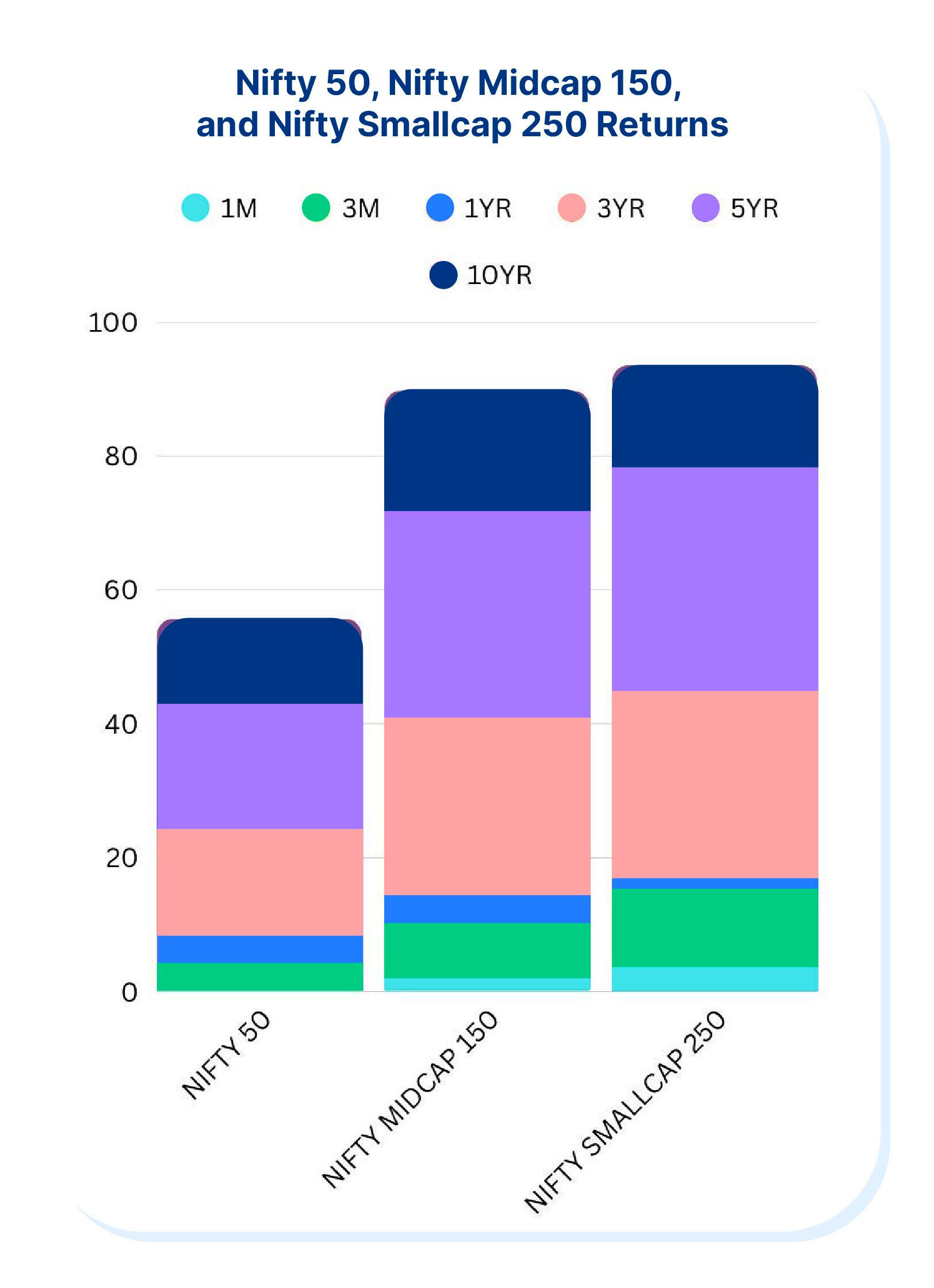
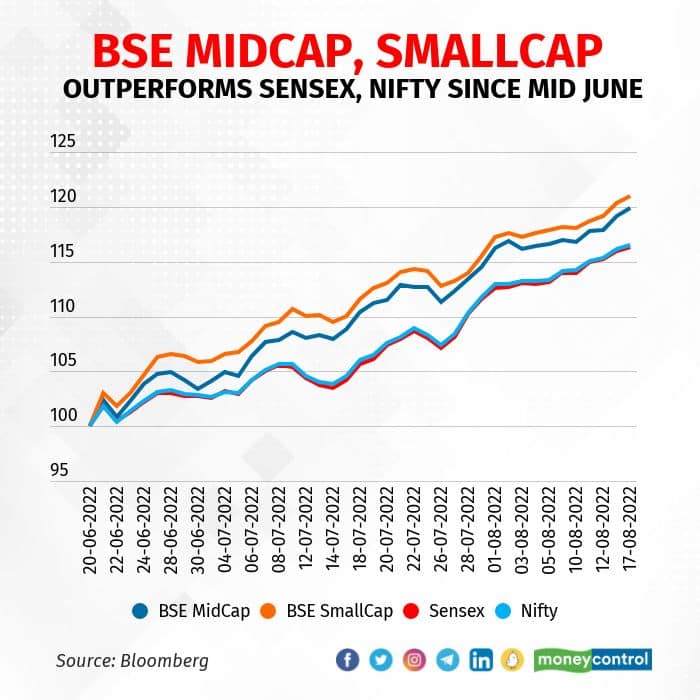
Performance Comparison (Long-Term Trend)
Historical Trend (15+ Years Average)
| Category | Average Return |
|---|---|
| Large Cap | 10–12% |
| Mid Cap | 12–15% |
| Small Cap | 14–18% (Unstable) |
⚠️ Note: Returns are not guaranteed. Small caps may also give negative returns for years.
Why Large Caps Are Safer in India
Large cap companies:
Have strong cash flow
Survive economic crises
Get government support indirectly
Have global presence
During events like COVID or recession, large caps fall less and recover faster.
👉 Related Read:
Internal Link: How to Invest Safely in Indian Stock Market
https://marketmeterab.blogspot.com/safe-stock-investing-india
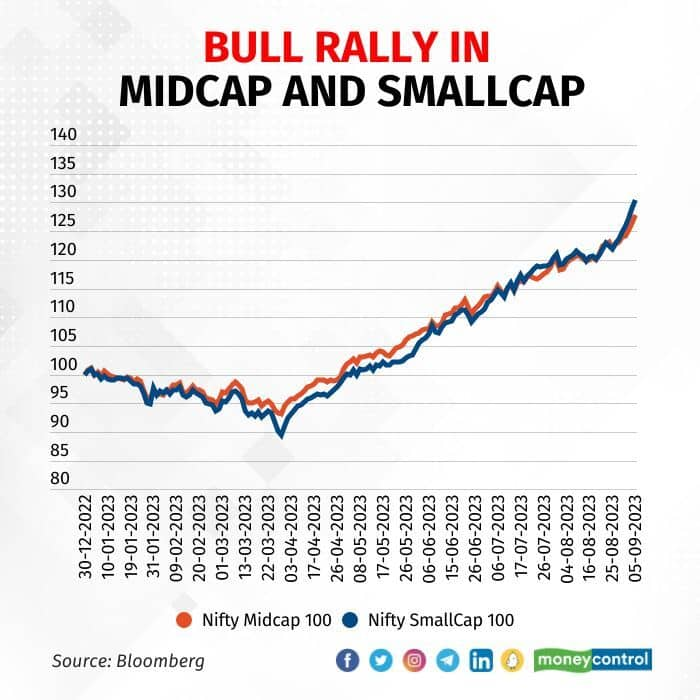
Why Mid Caps Create Maximum Wealth
Many famous Indian companies were once mid caps.
Example:
Asian Paints (earlier)
Infosys (earlier)
Mid caps grow faster because:
They expand aggressively
They enter new markets
They improve margins
This makes them wealth multipliers.
Why Small Caps Are Risky (But Attractive)
Small caps fail mainly because:
Poor management
Low funding
Business uncertainty
Weak governance
But some become multi-baggers.
Example:
₹10,000 invested → ₹5 lakh in 10 years (rare, but possible)
This attracts young investors.
Best Allocation Strategy for Indian Investors
For Beginners (Age 25–35)
| Category | Allocation |
|---|---|
| Large Cap | 50% |
| Mid Cap | 30% |
| Small Cap | 20% |
For Middle-Age (35–50)
| Category | Allocation |
|---|---|
| Large Cap | 60% |
| Mid Cap | 25% |
| Small Cap | 15% |
For Near Retirement (50+)
| Category | Allocation |
|---|---|
| Large Cap | 70% |
| Mid Cap | 20% |
| Small Cap | 10% |
Through Mutual Funds or Direct Stocks?
If you are confused, choose mutual funds.
| Method | Suitable For |
|---|---|
| Mutual Funds | Beginners |
| Direct Stocks | Experienced |
👉 Related Guide:
Internal Link: Best Mutual Funds for Beginners in India
https://marketmeterab.blogspot.com/best-mutual-funds-india
Common Mistakes Indians Make
Putting all money in small caps
Chasing past returns
Panic selling
No diversification
No long-term plan
Avoid these to protect your hard-earned money.
Statutory Disclaimer
Investments in securities markets are subject to market risks. Read all related documents carefully before investing. Past performance is not indicative of future results. This article is for educational purposes only and not investment advice. Investors should take decisions based on their financial goals, risk profile, and guidelines issued by SEBI.
Frequently Asked Questions (FAQ)
Q1. Which is best: large, mid, or small cap?
There is no “best”. A mix of all three works best.
Q2. Are small caps dangerous?
They are risky, but not bad if invested carefully.
Q3. Can beginners invest in mid caps?
Yes, through mutual funds.
Q4. How long should I stay invested?
Minimum 7–10 years for good results.
Q5. Should I change allocation yearly?
Yes, review once a year.
Useful Video & Image Resources
Large vs Mid vs Small Cap Explained (Hindi):
https://www.youtube.com/watch?v=4LqR9X7mJwEMarket Cap Explained:
https://www.youtube.com/watch?v=QZ8t7PpWJ0kStock Classification Chart:
https://www.nseindia.com/market-data/indices
Bibliography
AMFI India Reports
RBI Financial Stability Reports
Annual Reports of Listed Companies
Suggested Internal Links for MarketMeterAB
SIP vs Lump Sum Investment in India
https://marketmeterab.blogspot.com/sip-vs-lumpsumBest SIP Amount for Beginners
https://marketmeterab.blogspot.com/best-sip-amount-indiaHow to Build Wealth in India
https://marketmeterab.blogspot.com/wealth-building-india
Final Thoughts
Large cap gives safety.
Mid cap gives growth.
Small cap gives opportunity.
A smart Indian investor does not choose only one.
👉 He balances all three.
That balance is what turns a normal salary into long-term financial freedom.

Comments
Post a Comment