PPF in India Explained with Calculation: Interest, Returns & 15-Year Growth Example (2026 Guide)

PPF in India Explained with Calculation: Simple Guide for Safe Long-Term Savings
PPF in India Explained with Calculation: Interest, Returns & 15-Year Growth Example (2026 Guide).
Learn how PPF works in India with simple calculations, interest rate, tax benefits, maturity rules, and real examples. Beginner-friendly guide for safe long-term savings.
Public Provident Fund PPF India passbook savings example
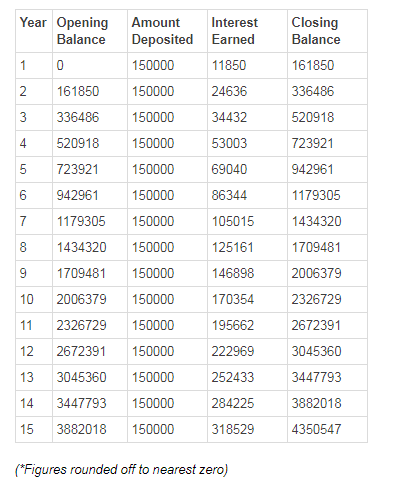
PPF interest calculation chart 15 years India example
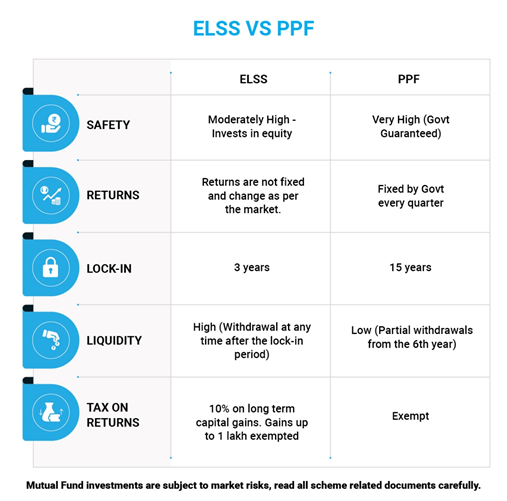
PPF vs FD vs ELSS comparison table India infographic
Indian family long term savings planning PPF account
PPF account opening form India post office bank
For many Indian citizens, especially middle-class families, one question always comes up:
“Where can I invest safely for long term without worrying about market risk?”
One simple answer is:
👉 Public Provident Fund (PPF)
PPF is one of the safest long-term savings options in India. It is government-backed, tax-friendly, and disciplined.
In this article, we will explain PPF in India with proper calculation, in a simple, practical, and friendly way, using real Indian examples.
No complex formulas. Only clear understanding.
What Is PPF? (In Simple Words)
PPF (Public Provident Fund) is a long-term savings scheme launched by the Government of India.
It is:
✅ Safe
✅ Government-backed
✅ Tax-saving
✅ Long-term
✅ Low risk
It is ideal for people who want security more than high returns.
Who Controls PPF in India?
PPF is governed by the Government of India and follows rules notified by:
Ministry of Finance (India)
Interest rates are decided quarterly by the government.
PPF accounts can be opened in:
Post Offices
Nationalized Banks
Selected Private Banks
Key Features of PPF
| Feature | Details |
|---|---|
| Lock-in Period | 15 Years |
| Minimum Investment | ₹500 per year |
| Maximum Investment | ₹1.5 lakh per year |
| Interest Rate | Around 7–8% (changes quarterly) |
| Risk | Very Low |
| Tax Benefit | Yes (EEE) |
What Does EEE Mean?
PPF is an EEE (Exempt-Exempt-Exempt) investment.
It means:
1️⃣ Investment is tax deductible (Section 80C)
2️⃣ Interest earned is tax-free
3️⃣ Maturity amount is tax-free
This makes PPF very powerful for tax planning.
👉 Related Read:
Internal Link: ELSS Mutual Funds Explained
https://marketmeterab.blogspot.com/elss-mutual-funds-india
How PPF Interest Is Calculated
Interest in PPF is calculated:
👉 On lowest balance between 5th and last day of every month
👉 Compounded yearly
So, best practice:
💡 Invest before 5th of April to get full-year interest.
PPF Calculation Example (Very Important)
Let’s understand with real numbers.
Case 1: Monthly Investment ₹5,000
Monthly investment: ₹5,000
Yearly investment: ₹60,000
Duration: 15 years
Interest rate: 7.5% (example)
Total Invested:
₹60,000 × 15 = ₹9,00,000
Approx Maturity Value:
₹16–18 lakh
So, ₹9 lakh becomes nearly double.
Case 2: Maximum Investment ₹1.5 Lakh Per Year
Annual investment: ₹1,50,000
Duration: 15 years
Interest rate: 7.5%
Total Invested:
₹22,50,000
Approx Maturity Value:
₹40–45 lakh
This is fully tax-free.
Chart: PPF Growth Over 15 Years (₹1.5 Lakh Yearly)
Year 1:  ₹1,50,000
Year 5:  ₹8–9 lakh
Year 10: ₹18–20 lakh
Year 15: ₹40+ lakh
Compounding works silently.
Partial Withdrawal Rules
After 7 years:
👉 Partial withdrawal allowed.
Loan facility available from 3rd year.
This gives some flexibility.
Can You Extend PPF After 15 Years?
Yes.
You can:
1️⃣ Close account and withdraw
2️⃣ Extend with contribution
3️⃣ Extend without contribution
Many people extend for 5 more years.
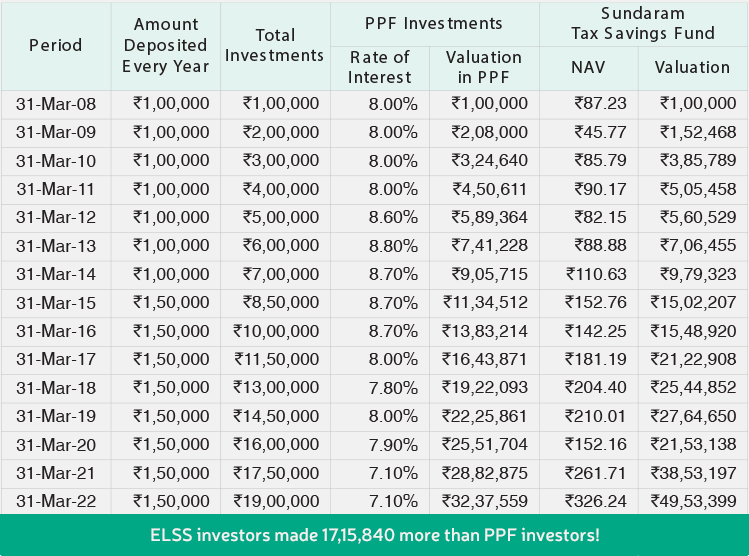
PPF vs FD vs ELSS (Comparison Table)
| Feature | PPF | FD | ELSS |
|---|---|---|---|
| Risk | Very Low | Low | Medium |
| Returns | 7–8% | 5–6% | 10–12% (long term) |
| Lock-in | 15 Years | 5 Years | 3 Years |
| Tax on Maturity | No | Yes | Yes (LTCG rules) |
| Suitable For | Safety Seekers | Conservative | Growth Seekers |
👉 PPF = Safety
👉 ELSS = Growth
Real-Life Indian Example
Case: Suman (School Teacher, Kolkata)
Age: 30
Invests ₹1 lakh yearly in PPF
At age 45:
Total invested: ₹15 lakh
Value: ₹28–30 lakh
Tax-free corpus.
This supports her child’s education.
Who Should Invest in PPF?
PPF is ideal for:
✅ Salaried employees
✅ Risk-averse investors
✅ Government employees
✅ People planning retirement
✅ Parents saving for children
Not ideal for:
❌ People seeking quick returns
❌ Traders
❌ Short-term investors
Best Strategy for Indian Citizens
Smart investors combine:
PPF for safety
SIP for growth
👉 Related Read:
Internal Link: Long Term vs Short Term Investing
https://marketmeterab.blogspot.com/long-term-vs-short-term-investing
When Should You Deposit in PPF?
Best time:
👉 Before 5th April each year
Why?
You earn interest for full year.
Small timing gives extra money.
PPF Account Opening Process
Steps:
1️⃣ Visit bank/post office
2️⃣ Fill PPF form
3️⃣ Submit PAN, Aadhaar
4️⃣ Deposit minimum ₹500
Many banks allow online opening.
👉 Related Read:
Internal Link: How to Open Demat Account in India
https://marketmeterab.blogspot.com/how-to-open-demat-account
(Understand difference between market and savings products.)
Common Mistakes Indians Make in PPF
Depositing after 5th date
Missing yearly minimum
Expecting stock-like returns
Ignoring extension option
Not using full ₹1.5 lakh limit
Avoid these.
PPF and Retirement Planning
PPF works well for:
Conservative retirement planning
Safe long-term accumulation
Backup corpus
But inflation may reduce real value.
So combine with growth investments.
PPF vs Stock Market Returns
| Feature | PPF | Stock Market |
|---|---|---|
| Risk | Very Low | Medium |
| Return | Moderate | Higher |
| Volatility | None | High |
| Peace of Mind | High | Depends |
👉 Balance both for best results.
Statutory Disclaimer
PPF interest rates are subject to change as notified by the Government of India. This article is for educational purposes only and does not constitute financial advice. Investors should evaluate their financial goals and consult a qualified advisor before making investment decisions. Market-linked products are regulated by Securities and Exchange Board of India, while PPF is governed by the Government of India.
Frequently Asked Questions (FAQ)
Q1. Is PPF 100% safe?
Yes, backed by Government of India.
Q2. Can I withdraw before 15 years?
Partial withdrawal allowed after 7 years.
Q3. Can I invest monthly?
Yes, monthly or yearly.
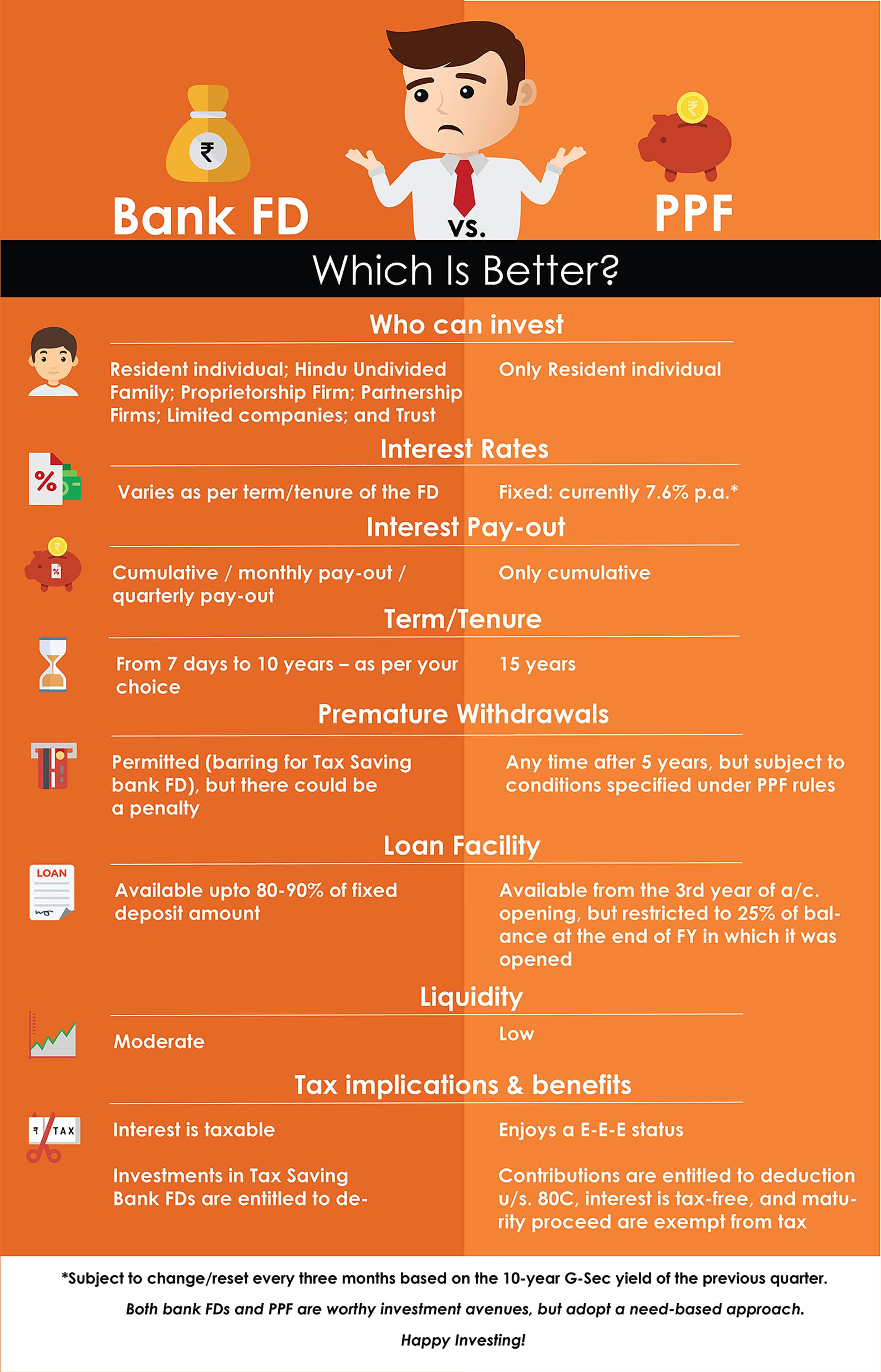
Q4. Is PPF better than FD?
For long-term tax-free growth, yes.
Q5. Can husband and wife both open PPF?
Yes, separate accounts allowed.
Useful Video & Image Resources
PPF Explained in Hindi:
https://www.youtube.com/watch?v=F8M2Q9L7X4APPF Calculation Example:
https://www.youtube.com/watch?v=K9F3L2M8X7QIndia Post PPF Details:
https://www.indiapost.gov.inSBI PPF Information:
https://sbi.co.in
Bibliography
Ministry of Finance (India) Notifications
RBI Financial Stability Reports
Income Tax Act – Section 80C
Bank PPF Brochures
Government Savings Scheme Guidelines
Suggested Internal Links for MarketMeterAB
What Is Stock Market in India
https://marketmeterab.blogspot.com/what-is-stock-market-indiaELSS Mutual Funds Explained
https://marketmeterab.blogspot.com/elss-mutual-funds-indiaSIP vs Lump Sum Investment
https://marketmeterab.blogspot.com/sip-vs-lumpsumLong Term vs Short Term Investing
https://marketmeterab.blogspot.com/long-term-vs-short-term-investingCharges in Stock Trading Explained
https://marketmeterab.blogspot.com/stock-trading-charges-india
Final Words
PPF is not for fast money.
It is for:
✅ Stability
✅ Discipline
✅ Tax savings
✅ Long-term security
If you want peace of mind and safe growth, PPF is a strong option.
But remember:
👉 Safety builds foundation.
👉 Growth builds wealth.
Combine both wisely, and your financial future will stay strong and balanced.

Comments
Post a Comment