SIP vs Lump Sum Investment in India: Which is Better for Middle-Class Investors?


SIP vs Lump Sum Investment in India: Which is Better for Middle-Class Investors?
For most Indian middle-class and working citizens, investing money is not about becoming rich overnight. It is about financial safety, future security, and peaceful sleep. When people start learning about mutual funds, one question always comes first:
“Should I invest through SIP or Lump Sum in India?”
This confusion is very common, especially among salaried employees, small business owners, and self-employed professionals.
This article explains SIP vs Lump Sum investment in India in a simple, practical, and real-life Indian way, without complicated financial words.
What is SIP Investment? (Simple Meaning)
SIP (Systematic Investment Plan) means investing a fixed amount every month into a mutual fund.
Example:
You invest ₹3,000 every month
Money is invested automatically
You buy more units when market is down
You buy fewer units when market is high
This process reduces risk and builds discipline.
👉 Beginner-friendly guide:
Internal Link: What is SIP and How SIP Works in India
https://marketmeterab.blogspot.com/what-is-sip-india
What is Lump Sum Investment?
Lump sum investment means investing a large amount at one time.
Example:
You invest ₹1,00,000 at once
Market movement immediately affects your investment
Returns depend heavily on timing
This method suits people who have surplus money ready.
SIP vs Lump Sum: Basic Difference Table
| Feature | SIP | Lump Sum |
|---|---|---|
| Investment Style | Monthly small amount | One-time large amount |
| Best For | Salaried & middle class | People with surplus funds |
| Market Timing Needed | No | Yes |
| Risk Level | Lower (long-term) | Higher (short-term) |
| Discipline | Automatic | Manual |
| Stress Level | Low | High |
SIP vs Lump Sum: Indian Example (Very Important)
Case 1: SIP Investor – Amit (Office Employee)
Monthly SIP: ₹5,000
Investment period: 15 years
Total invested: ₹9,00,000
Estimated value @12% return: ₹25–27 lakh
Amit did not worry about market ups and downs.
Case 2: Lump Sum Investor – Raj (Business Owner)
One-time investment: ₹9,00,000
Invested when market was high
Market fell 20% after investment
Result:
Portfolio value dropped sharply
Emotional stress increased
Panic selling risk increased
👉 This is where SIP wins for common Indians.
How SIP Reduces Risk: Rupee Cost Averaging
SIP follows a concept called Rupee Cost Averaging.
| Market Level | Units Purchased |
|---|---|
| Market High | Fewer units |
| Market Low | More units |
Over time, average cost becomes lower.
Lump sum investment does not get this benefit.
Which is Better During Market Volatility?
| Situation | SIP | Lump Sum |
|---|---|---|
| Market Falling | Very Good | Risky |
| Market Rising | Good | Good |
| Market Uncertain | Best | Dangerous |
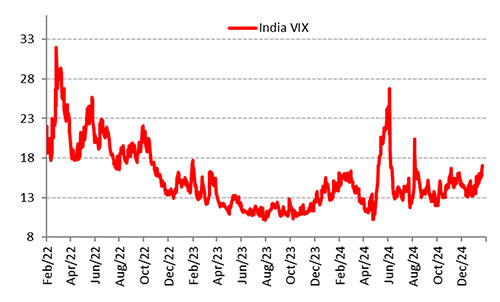
👉 Indian markets are volatile. SIP suits Indian conditions better.
SIP vs Lump Sum for Indian Salaried Class
SIP is Better Because:
Salary comes monthly
Expenses are regular
No pressure of timing
Easy budgeting
Lump Sum is Difficult Because:
Rarely have big idle money
Emotional decisions increase
Requires market knowledge
When Lump Sum Investment Makes Sense in India
Lump sum investment is useful when:
You receive bonus or inheritance
Market has corrected heavily
You have long-term horizon (10+ years)
You understand market cycles
Even then, many experts suggest Systematic Transfer Plan (STP) instead of direct lump sum.
👉 Read more:
Internal Link: STP Explained for Indian Investors
https://marketmeterab.blogspot.com/stp-mutual-fund-india
SIP vs Lump Sum Returns: Long-Term Reality
Over long periods (15–20 years):
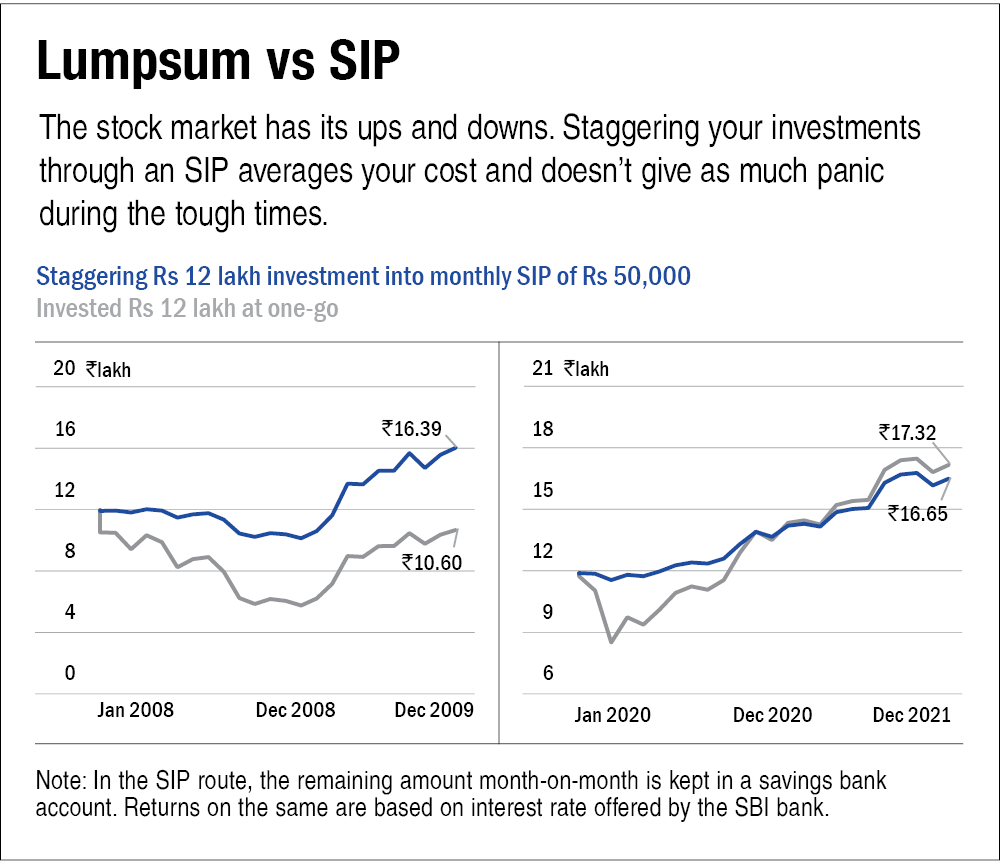
SIP returns and Lump Sum returns tend to be similar
SIP wins emotionally and behaviorally
Lump sum requires perfect timing (very rare)
👉 Discipline beats intelligence in investing.
Taxation: SIP vs Lump Sum in India
There is no difference in tax rules.
Equity mutual funds taxed as per holding period
Long-term capital gains above ₹1.25 lakh are taxable
SIP is treated as multiple investments with different dates
Common Mistakes Indians Make
Stopping SIP during market fall
Investing lump sum after market rallies
Copying others without understanding
Expecting quick returns
Ignoring emergency fund
👉 First build emergency fund, then invest.
SIP + Lump Sum: Best Indian Strategy
Smart Indian investors use both:
SIP for regular income
Lump sum during market corrections
SIP step-up with salary hikes
This balanced approach works best.
Statutory Disclaimer
Mutual Fund investments are subject to market risks. Read all scheme-related documents carefully. Past performance is not indicative of future returns. This article is for educational purposes only and not investment advice. Please invest based on your risk profile and financial goals as guided by regulations issued by SEBI.
Frequently Asked Questions (FAQ)
Q1. Is SIP safer than lump sum?
Yes, SIP reduces risk through time averaging.
Q2. Can I convert lump sum into SIP?
Yes, via Systematic Transfer Plan (STP).
Q3. Which gives higher returns?
Both give similar returns long term. SIP wins emotionally.
Q4. Is lump sum bad?
No, but it requires correct timing and patience.
Q5. Should beginners avoid lump sum?
Beginners should prefer SIP.
Useful Videos & Images
SIP vs Lump Sum Explained (Hindi):
https://www.youtube.com/watch?v=V5F7k4G0P0kRupee Cost Averaging Explained:
https://www.youtube.com/watch?v=8eY2xP5M0mYSIP vs Lump Sum Chart:
https://www.amfiindia.com/images/sip-vs-lumpsum.png
Bibliography
AMFI India – Investor Education
SEBI Mutual Fund Guidelines
Historical Nifty 50 Data
Mutual Fund Offer Documents
Suggested Internal Links for further studies :
Best SIP Amount for Beginners in India
https://marketmeterab.blogspot.com/best-sip-amount-indiaBest Mutual Funds for Long Term Wealth
https://marketmeterab.blogspot.com/best-mutual-funds-indiaHow Indians Can Build Wealth Slowly
https://marketmeterab.blogspot.com/wealth-building-india
Final Words
For Indian middle-class investors, SIP is peace, and lump sum is opportunity.
If you want stress-free wealth creation, SIP is your best friend.
If you get extra money and understand markets, lump sum can help.
👉 Consistency matters more than amount or timing.
This simple truth has built wealth for millions of Indians.


Comments
Post a Comment