What Is Term Insurance in India? Simple Guide to Life Cover & Family Security (2026)



What Is Term Insurance in India Explained: Complete Guide for Financial Protection
What Is Term Insurance in India? Simple Guide to Life Cover & Family Security (2026)
Learn what term insurance is in India, how it works, premium calculation, benefits, tax savings, and real examples. Beginner-friendly guide for family protection.
Term insurance policy India family financial protection concept
Indian family life insurance planning illustration
Term insurance comparison chart India infographic
Buying term life insurance online India laptop mobile
Life insurance advisor explaining term plan to Indian family
For most Indian families, one big worry is always there:
“What will happen to my family if something happens to me?”
If you are the main earning member, this question is very important.
The simplest and cheapest solution is:
👉 Term Insurance
In this article, we will explain what term insurance is in India in a simple, practical, and friendly way, using real Indian examples.
No complicated insurance language. Only clear understanding.
What Is Term Insurance? (In Simple Words)
Term insurance is a pure life insurance plan.
It means:
👉 You pay a small amount every year (premium).
👉 If you die during the policy period, your family gets money.
👉 If you survive, you get nothing.
So:
Term insurance = Protection, not investment
Its main job is:
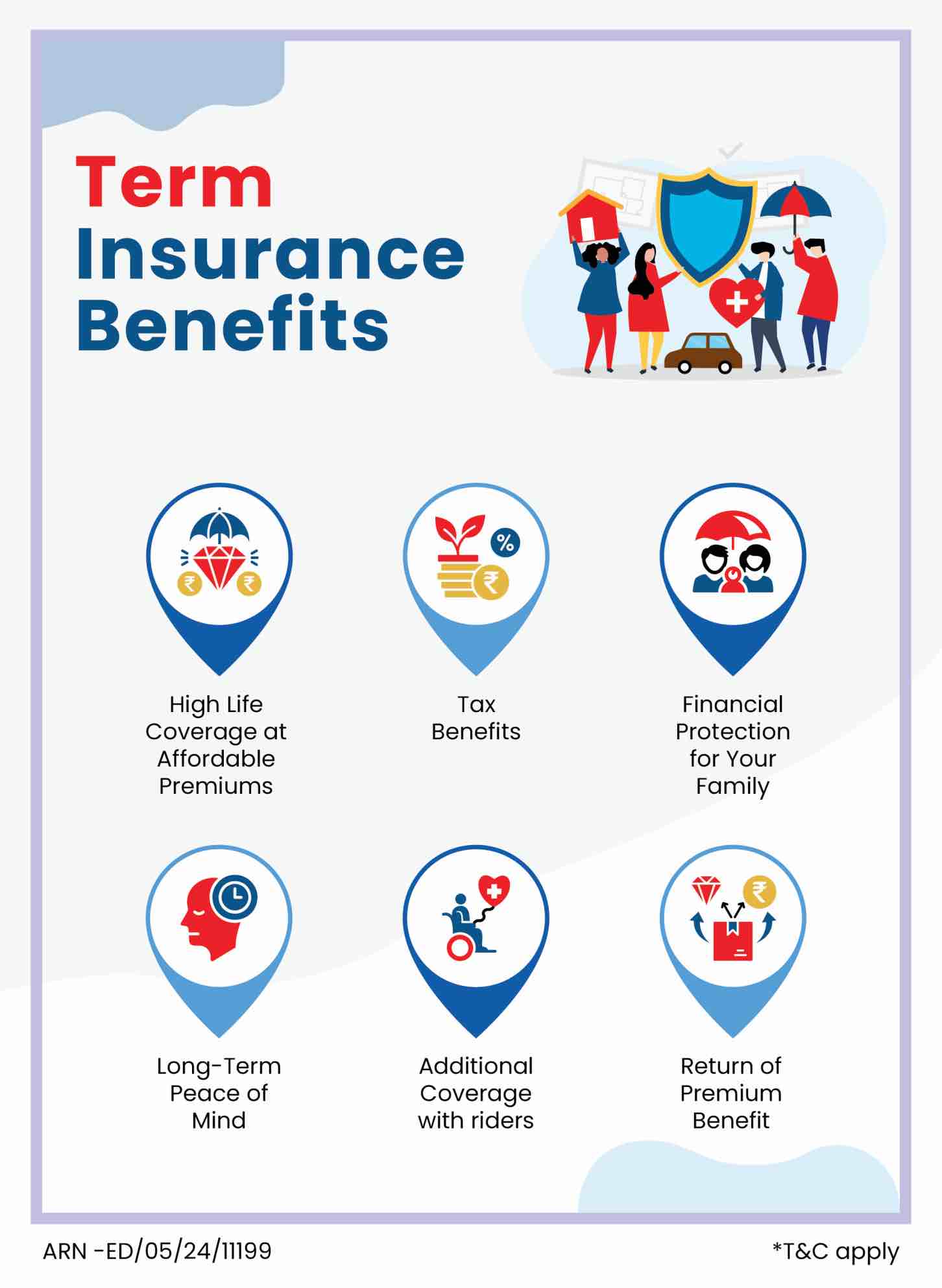
✅ Secure your family’s future
✅ Replace your income
✅ Pay loans and expenses
Who Regulates Insurance in India?
All insurance companies in India are regulated by:
👉 Insurance Regulatory and Development Authority of India (IRDAI)
This body protects customers and ensures fair practices.
So, your term policy is safe and legally protected.
Why Term Insurance Is Important for Indians
Many Indians think:
“I have savings, FD, and some property. Is insurance needed?”
Yes. Because:
✔ Savings may not be enough
✔ Loans remain after death
✔ Children need education
✔ Spouse needs income
Term insurance gives big cover at low cost.
Real-Life Example (Very Common Case)
Case: Ramesh (Office Employee, Ranchi)
Age: 30
Salary: ₹35,000/month
Home Loan: ₹25 lakh
Two children
He buys:
👉 Term Plan: ₹1 crore cover
👉 Premium: ₹8,000/year
If something happens to Ramesh:
✔ Family gets ₹1 crore
✔ Loan cleared
✔ Children’s future safe
This is why term insurance matters.
How Term Insurance Works
Let us understand step-by-step.
Step 1: Choose Cover Amount
You decide how much money your family needs.
Example: ₹50 lakh / ₹1 crore / ₹2 crore
Step 2: Choose Policy Term
You choose how long you want coverage.
Example: Till age 60 or 65.
Step 3: Pay Premium
You pay monthly/yearly premium.
Example: ₹600 per month.
Step 4: Claim (If Death Happens)
If policyholder dies:
👉 Family gets full amount.
No deduction.
Chart: Term Insurance Working Flow
Buy Policy
     ↓
Pay Premium
     ↓
Policy Active
     ↓
(If Death)
     ↓
Family Gets Money
Simple and transparent.
Types of Term Insurance in India
There are mainly four types.
1️⃣ Level Term Plan (Most Popular)
Same cover throughout
Same premium
Best for most people.
2️⃣ Increasing Term Plan
Cover increases over time
Premium slightly higher
Good for inflation protection.
3️⃣ Decreasing Term Plan
Cover reduces with loan
Used for home loans
Good for borrowers.
4️⃣ Return of Premium Plan
Premium returned if you survive
Cost is very high
Usually not recommended.
How Much Term Insurance Do You Need?
Simple Rule:
👉 Cover = 15–20 × Annual Income
Example
Monthly Salary = ₹40,000
Annual = ₹4.8 lakh
Ideal Cover:
₹4.8L × 15 = ₹72 lakh
₹4.8L × 20 = ₹96 lakh
So, ₹75L – ₹1Cr is good.
Term Insurance Premium Example
Premium depends on:
✔ Age
✔ Health
✔ Smoking habit
✔ Cover amount
✔ Policy term
Sample Premium (Approx)
| Age | Cover | Yearly Premium |
|---|---|---|
| 25 | ₹1 Cr | ₹5,000–6,000 |
| 30 | ₹1 Cr | ₹7,000–9,000 |
| 35 | ₹1 Cr | ₹10,000–13,000 |
| 40 | ₹1 Cr | ₹15,000+ |
Earlier you buy = Cheaper premium.
Term Insurance vs LIC Endowment Plans
Many Indians buy traditional policies from:
👉 Life Insurance Corporation of India (LIC)
Let’s compare.
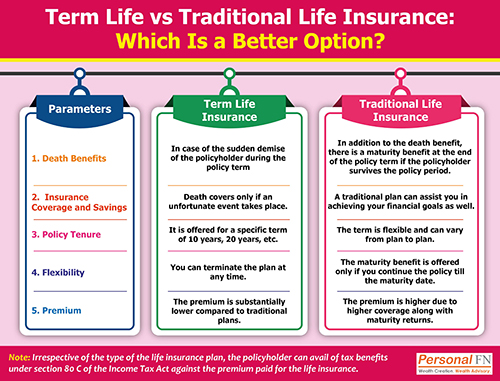
| Feature | Term Plan | Endowment/Traditional |
|---|---|---|
| Purpose | Protection | Saving + Insurance |
| Return | No | Low |
| Premium | Low | High |
| Cover | High | Low |
👉 For protection, term plan is best.
Tax Benefits of Term Insurance
Term insurance gives tax benefits.
1️⃣ Premium Deduction (80C)
Up to ₹1.5 lakh per year.
2️⃣ Claim Amount (10D)
Death benefit is fully tax-free.
So:
✔ Save tax
✔ Protect family
👉 Related Read:
Internal Link: Mutual Fund Taxation in India
https://marketmeterab.blogspot.com/mutual-fund-taxation-india
Term Insurance and Loans
If you have:
Home loan
Car loan
Business loan
You must have term insurance.
Why?
👉 Your family should not carry your loan.
You can also take decreasing cover for loans.
Online vs Offline Term Insurance
| Feature | Online | Agent |
|---|---|---|
| Cost | Lower | Higher |
| Transparency | High | Medium |
| Convenience | High | Medium |
| Support | Online | Personal |
Most young Indians prefer online.
Common Mistakes Indians Make
Buying low cover
Hiding medical history
Choosing wrong nominee
Not reviewing policy
Mixing insurance with investment
Avoid these mistakes.
How to Buy Term Insurance (Simple Steps)
1️⃣ Compare plans online
2️⃣ Choose right cover
3️⃣ Fill details honestly
4️⃣ Do medical test (if asked)
5️⃣ Pay premium
6️⃣ Get policy document
Takes 30–60 minutes online.
Term Insurance + Investment = Best Strategy
Smart Indians do this:
| Tool | Purpose |
|---|---|
| Term Plan | Protection |
| SIP | Wealth |
| PPF | Safety |
| NPS | Retirement |
Example:
Term: ₹1 Cr
SIP: ₹3,000/month
PPF: ₹50,000/year
Balanced planning.
👉 Related Read:
Internal Link: Best SIP Amount for Beginners
https://marketmeterab.blogspot.com/best-sip-amount-india
Term Insurance vs Health Insurance
| Feature | Term | Health |
|---|---|---|
| Covers | Death | Hospital Bills |
| Beneficiary | Family | Policyholder |
| Purpose | Income Replacement | Medical Protection |
👉 You need both.
Nomination and Claim Process
Always:
✔ Add correct nominee
✔ Update after marriage
✔ Inform family about policy
Claim process:
1️⃣ Inform company
2️⃣ Submit death certificate
3️⃣ Provide documents
4️⃣ Receive payout
Good companies settle in 15–30 days.
Safety of Term Insurance
Because it is regulated by IRDAI:
✔ No fraud companies
✔ Clear rules
✔ Customer grievance system
So, it is reliable.
Statutory Disclaimer
Insurance is subject to terms and conditions of the policy document. Premiums, benefits, and rules may change as per regulations. This article is for educational purposes only and does not constitute professional financial advice. Readers should evaluate their personal needs and consult certified advisors before purchasing any insurance product. All insurers are regulated by the Insurance Regulatory and Development Authority of India.
Frequently Asked Questions (FAQ)
Q1. Is term insurance compulsory?
No, but highly recommended.
Q2. What if I stop paying premium?
Policy may lapse. Protection ends.
Q3. Can I increase cover later?
Some plans allow. Better buy enough early.
Q4. Is medical test necessary?
For high cover, yes.
Q5. Can housewives buy term plan?
Yes, if eligible and income criteria met.
Useful Video & Image Resources
Term Insurance Explained (Hindi):
https://www.youtube.com/watch?v=F8M2Q9L7X4AHow to Choose Best Term Plan:
https://www.youtube.com/watch?v=K9F3L2M8X7QIRDAI Official Website:
https://www.irdai.gov.inLIC Term Plans Page:
https://licindia.in
Bibliography
IRDAI Consumer Guidelines
Insurance Act of India
LIC & Private Insurer Brochures
Income Tax Act – Section 80C & 10D
RBI Financial Literacy Reports
Suggested Internal Links for MarketMeterAB
Long Term vs Short Term Investing
https://marketmeterab.blogspot.com/long-term-vs-short-term-investingHow Dividends Work in India
https://marketmeterab.blogspot.com/how-dividends-workNPS Scheme in India Explained
https://marketmeterab.blogspot.com/nps-scheme-indiaEPF vs PPF Difference Explained
https://marketmeterab.blogspot.com/epf-vs-ppf-differenceCharges in Stock Trading Explained
https://marketmeterab.blogspot.com/stock-trading-charges-india
Final Words
Term insurance is not about profit.
It is about:
✅ Responsibility
✅ Love for family
✅ Financial discipline
✅ Peace of mind
If you earn today, your family depends on you.
👉 A small premium today can protect their entire future.
Remember: First insure, then invest. Always.

Comments
Post a Comment