Retirement Corpus Calculation in India: How Much Money Do You Need to Retire Comfortably




Retirement Corpus Calculation in India: How Much Money Do You Need to Retire Comfortably
Description
Learn how to calculate retirement corpus in India with simple formulas, examples, and investment strategies. A practical guide for Indian citizens to plan retirement effectively.
Introduction
One of the biggest questions people ask while planning retirement is simple:
“How much money will I need after retirement?”
This amount is called the retirement corpus — the total savings required to live comfortably after you stop working.
Many Indians underestimate this number because they forget two key factors:
If retirement planning is done properly, your investments can generate enough income to support your lifestyle without financial stress.
In this guide, we will explain in a simple practical way:
What retirement corpus means
Step-by-step calculation method
Practical Indian examples
Tools and strategies to build this corpus
What is Retirement Corpus?
Retirement corpus simply means:
The total amount of money required at retirement to cover all future expenses for the rest of life.
This corpus should cover:
Monthly living expenses
Healthcare expenses
Lifestyle expenses
Emergency funds
For most middle-class Indian families, the retirement corpus usually ranges between:
₹1.5 Crore – ₹5 Crore, depending on lifestyle and inflation.
Why Retirement Corpus Calculation is Important


Proper calculation helps you:
1. Avoid Financial Stress
Without proper planning, retirement may become financially difficult.
2. Maintain Lifestyle
You can continue the same standard of living even after retirement.
3. Beat Inflation
Prices rise over time, so future expenses must be estimated carefully.
4. Build Systematic Investments
Once the target corpus is known, investment planning becomes easier.
Key Factors That Affect Retirement Corpus
Before calculating the corpus, consider these factors.
Current Age
The younger you start, the easier it is to build a large corpus through compounding.
Retirement Age
Most Indians retire around 60 years.
Monthly Expenses
Your current spending determines future retirement needs.
Inflation Rate
In India, long-term inflation generally averages around 5–7%.
Life Expectancy
Retirement planning should consider 80–85 years of life expectancy.
Step-by-Step Retirement Corpus Calculation
Let us understand the calculation with a simple method.
Step 1: Estimate Current Monthly Expenses
Suppose your current monthly expense is:
₹50,000 per month
Annual expense:
₹50,000 × 12 = ₹6,00,000
Step 2: Adjust for Inflation
Assume:
Inflation rate = 6%
Years to retirement = 25
Future expense formula:
Future Expense = Current Expense × (1 + Inflation)^Years
Example calculation:
₹50,000 × (1.06)^25 ≈ ₹2,15,000 per month
So your future monthly expense at retirement = ₹2.15 lakh.
Step 3: Calculate Annual Retirement Expense
₹2,15,000 × 12 = ₹25,80,000 per year
Step 4: Apply Retirement Corpus Rule
Financial planners often use the 25X rule.
Retirement Corpus = Annual Expense × 25
Calculation:
₹25,80,000 × 25 ≈ ₹6.45 Crore
So in this example, the required retirement corpus is approximately:
₹6–6.5 Crore
Retirement Corpus Calculation Chart
Current Monthly Expense → Inflation Adjustment → Future Expense
              ↓
        Annual Expense
              ↓
     Multiply by 25 (Rule)
              ↓
        Retirement Corpus
This is the simplified retirement planning model used by many financial planners.
Practical Example for Indian Middle-Class Family
Rahul is a 32-year-old professional in Pune.
Details:
| Parameter | Value |
|---|---|
| Current age | 32 |
| Retirement age | 60 |
| Monthly expense | ₹60,000 |
| Inflation | 6% |
| Years to retirement | 28 |
Estimated retirement expense:
₹3 lakh per month
Annual expense:
₹36 lakh
Required retirement corpus:
₹36 lakh × 25 = ₹9 Crore
So Rahul should aim for ₹8–9 crore retirement corpus.
Investment Options to Build Retirement Corpus



To build a large retirement corpus, Indians should diversify investments.
1. Mutual Fund SIP
Equity mutual funds are powerful for long-term growth.
Expected return: 10–12%
Best suited for long-term investors.
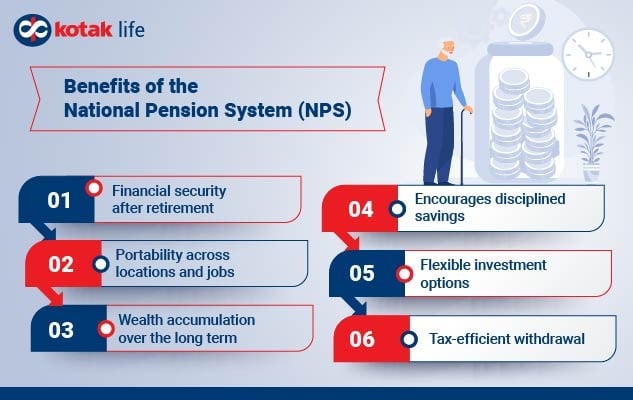
2. National Pension System (NPS)
NPS is designed specifically for retirement.
Benefits:
Tax deduction under Section 80CCD(1B)
Market-linked returns
Pension income after retirement
3. Employee Provident Fund (EPF)
EPF helps salaried employees automatically accumulate retirement savings.
Government backed and relatively safe.
4. Public Provident Fund (PPF)
PPF provides:
Tax-free returns
Long-term compounding
Government guarantee
5. Hybrid Mutual Funds
Balanced funds combine:
Equity growth
Debt stability
They are useful for people approaching retirement.
Monthly Investment Needed for Retirement
Here is an example of monthly investment required.
| Age | Monthly SIP | Estimated Corpus at 60 |
|---|---|---|
| 25 | ₹8,000 | ₹4 Crore |
| 30 | ₹12,000 | ₹4 Crore |
| 35 | ₹22,000 | ₹4 Crore |
| 40 | ₹40,000 | ₹4 Crore |
Starting early reduces investment pressure significantly.
Common Retirement Planning Mistakes
Avoid these common errors.
Ignoring Inflation
Inflation is the biggest enemy of retirement savings.
Starting Too Late
Many people begin retirement planning after 40.
Overdependence on Fixed Deposits
FD returns often fail to beat inflation.
Not Reviewing Investments
Investment portfolios should be reviewed every year.
Internal Resources on MarketMeterAB
For more financial knowledge, readers may also explore:
These articles help Indian investors build strong financial foundations.
Helpful Educational Video
Understanding retirement planning visually:
https://www.youtube.com/watch?v=2R7S7Fh1cWk
Frequently Asked Questions (FAQ)
How much retirement corpus is enough in India?
Most middle-class families require ₹3–10 crore depending on lifestyle, inflation, and location.
What is the 25X rule in retirement planning?
The rule suggests that retirement corpus should be 25 times annual expenses.
What is a safe withdrawal rate after retirement?
Financial planners often suggest 3–4% annual withdrawal to sustain funds for 25–30 years.
Should Indians invest in mutual funds for retirement?
Yes. Equity mutual funds help generate higher returns and beat inflation over long periods.
Statutory Disclaimer
This article is for informational and educational purposes only. It does not constitute financial or investment advice. Readers should consult a certified financial advisor before making investment decisions.
Bibliography
Reserve Bank of India – Financial Literacy Materials
Securities and Exchange Board of India (SEBI) Investor Awareness Guide
National Pension System Trust – Official Resources
Ministry of Finance, Government of India – Pension Schemes
Final Thoughts
Retirement planning is not about guessing numbers — it is about calculating realistically and investing consistently.
If you understand your future expenses, adjust them for inflation, and invest wisely, building a retirement corpus becomes achievable.
The most important step is simple:
Start early, stay disciplined, and allow compounding to build your financial future.

Comments
Post a Comment